
When diesel vehicle owners notice reduced power, poor fuel economy, or recurring DPF warning lights, the problem is often traced back to a clogged Diesel Particulate Filter (DPF). While regeneration can remove some soot buildup, it cannot eliminate all contaminants that accumulate over time. That is where professional DPF Cleaning Specialists play a critical role.
At 30 Minute DPF Clean, we work with diesel vehicles every day and understand how a blocked DPF can affect performance, fuel efficiency, and overall reliability. In this guide, we explain how DPF Cleaning Specialists restore clogged filters, improve engine performance, and help vehicle owners avoid costly replacements.
What Do DPF Cleaning Specialists Do?
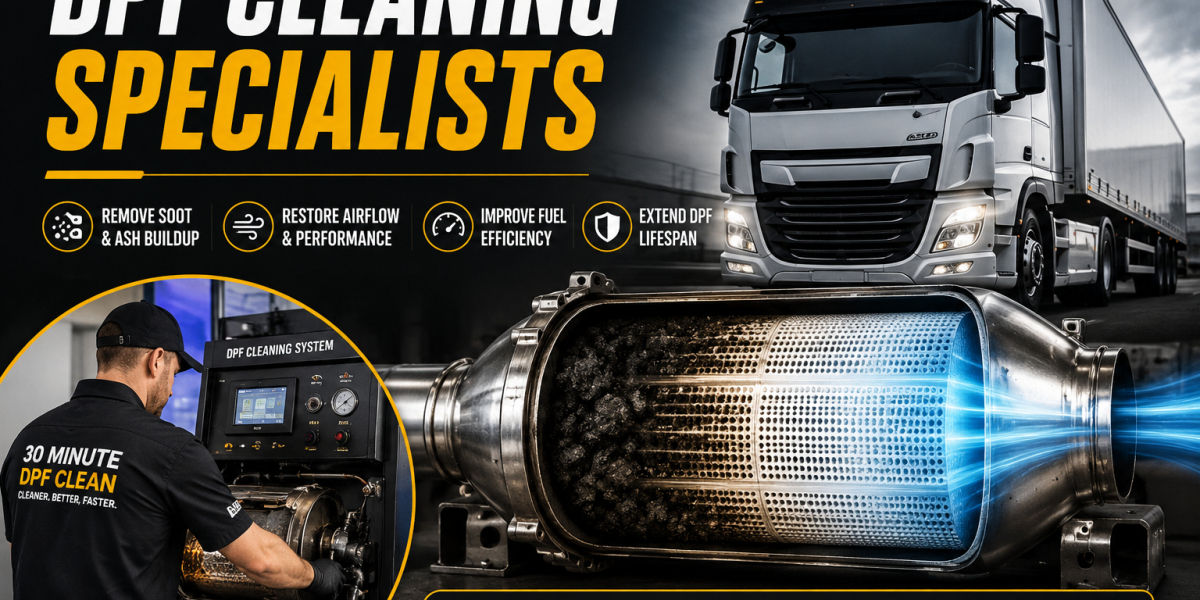
A Diesel Particulate Filter is designed to capture soot particles before they leave the exhaust system. Over thousands of miles, soot and ash accumulate inside the filter, restricting exhaust flow and increasing backpressure.
Professional DPF Cleaning Specialists use advanced equipment and proven cleaning methods to remove these deposits and restore the filter's efficiency. Rather than replacing an expensive DPF, specialist cleaning helps extend its lifespan while improving overall vehicle performance.
Their goal is not just to clear a blockage but to restore the entire aftertreatment system to operate as efficiently as possible.
How DPF Cleaning Specialists Fix Clogged Filters
Thorough DPF Inspection
The first step is a detailed inspection of the filter and exhaust system. Specialists check for excessive soot loading, ash accumulation, physical damage, and airflow restrictions.
This assessment helps determine whether the DPF can be restored through cleaning or if additional repairs may be required.
Airflow and Backpressure Testing
One of the most important diagnostic procedures involves measuring airflow and exhaust backpressure.
A heavily restricted DPF creates excessive backpressure that forces the engine to work harder. This can reduce power, increase fuel consumption, and accelerate wear on engine components.
Testing before cleaning provides an accurate picture of the filter's condition and helps verify results after service.
Professional DPF Cleaning Process
Unlike standard regenerations that only burn soot, professional cleaning removes both soot and ash deposits trapped deep inside the filter.
Using specialized hydraulic and airflow cleaning equipment, technicians flush contaminants from the DPF substrate without damaging its internal structure.
This process restores exhaust flow, reduces backpressure, and allows the filter to function as intended.
Post-Cleaning Performance Verification
After cleaning, technicians perform additional testing to verify that airflow has been restored and restrictions have been removed.
This final step ensures the DPF is operating efficiently before being returned to service.